April 15, 2026
technology
Filed from Northern California, April 15, 2026.
Today I searched "western cowboy boots size 11.5" on a major western brand's Shopify…
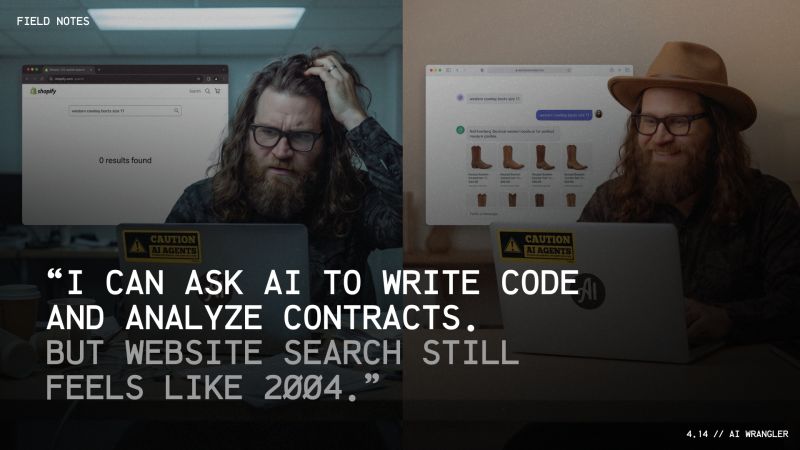
Today I searched "western cowboy boots size 11.5" on a major western brand's Shopify website. The result? "No products found." A western brand. That sells cowboy boots. Couldn't find its own cowboy boots.
I might as well flip open a catalog and call in my order.
Website search is broken. Not a little broken, fundamentally broken. And nobody talks about it because we've all just accepted it.
Here's what most site search actually does: it takes the words you typed and matches them against product titles. That's it. No understanding of what you meant. No synonyms. No intent. It doesn't know "cowboy boots" and "western boots" are the same thing. It doesn't know 11.5 is a size, not a price.
This is 2004 technology running on 2025 websites.
Meanwhile, I can open ChatGPT and type "square toe western boot, brown leather, under $200, wide foot" and get a genuinely useful answer in three seconds. The AI understands every word. The website search understands none of them.
The problem gets worse: - Misspell one word? Zero results. - Use a different term than what's in the product title? Zero results. - Search for something that's actually in stock but described differently? Zero results.
Every "0 results found" is a customer who came ready to buy and left with nothing. That's not a UX issue. That's a revenue leak.
And it's not just ecom brands. Content sites, SaaS apps, help centers, directories, search is the most used and least invested-in feature on almost every website.
The fix is two things: 1. Implement AI-powered search. It understands natural language, handles typos, recognizes synonyms, and actually knows what people mean, not just what they typed. The technology exists today. It's fast. It's affordable.
2. Fix your product metadata. Most product data is a mess, missing descriptions, no size info in searchable fields, inconsistent naming, zero structured attributes. AI search is only as good as the data behind it. Clean metadata = better search results, period.
And here's the bonus: both of these improvements also help your SEO and AEO (answer engine optimization). Better structured product data means Google indexes you better. Better semantic content means AI search engines like ChatGPT, Perplexity, and Claude can find and recommend your products too.
You fix search, you fix discovery everywhere, on your site, on Google, and in AI.
But most businesses don't even realize their search is the problem. They blame low conversion rates on pricing, product pages, or ads. Nobody looks at the search bar, the one place where a customer literally tells you what they want and asks "are we actually answering them?"
Your search bar is either your best salesperson or your worst. Right now, for most websites, it's the worst.
#AI #Search #Ecommerce #UX #ProductDiscovery #SEO #AEO #RetailTech
Mailing List
Join Field Notes
New notes on AI, building, and life from Northern California — plus the occasional printed mailing.